Electric Minibuses2026-09-24T08:47:11+00:00

Electric Minibus

Move to an electric minibus with confidence.

Helping you choose the right electric minibus for your school or organisation

Electric minibuses are becoming increasingly popular, especially now they can be driven on a car licence (conditions apply). The UK’s charging infrastructure is improving, and organisations looking to reduce their carbon footprint, as well as save on fuel,  maintenance costs, and ULEZ charges are choosing electric.

It makes sense to start replacing old diesel vehicles for electric minibuses, But we know that switching from diesel raises questions.

  • Will the battery last all day?
  • Where will we charge it?
  • How long will charging take?
  • And what happens when we need to make a longer journey?

Rivervale Minibus will help you understand the implications, pros, and cons of electric minibuses before you make that decision.
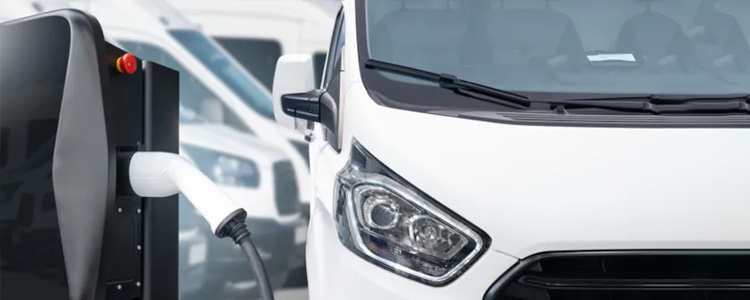
8-seat minibus Ford Tourneo Custom electric charging

We don’t assume electric minibuses are automatically right for everyone.

We look at how you actually use your minibus – including your average daily mileage, longest regular journeys, passenger numbers, dwell time and access to charging – and help you decide whether electric could work for you.

With estimated real-world ranges of 60–190 miles, depending on the vehicle and battery selected, there is now considerably more choice now. The regulations changed in 2025, allowing ‘volunteer’ drivers with standard car licences (driving for organisations with Section 19 Permits) to drive Zero Emission Vehicles (ZEV) with a Gross Vehicle Weight (GVW) of up to 4250kg, up to 5000kg with specialist equipment.

Rivervale minibus has brand-new electric vehicles from 8 to 15 seats; for lease on a five-year contract or to purchase outright. We will work with you to find the best option.

Worried about electric minibus range?

One of the biggest concerns when moving from diesel to electric is range anxiety – the fear that your minibus will run out of charge before you have completed your journeys.

If your minibus travels 40 or 50 miles during a typical day and returns to base every evening, do you really need 200 miles of real-world range?

Likewise, if your vehicle regularly travels more than 100 miles, carries a full complement of passengers, or makes longer motorway journeys, choosing a vehicle with a larger battery and planning where you could rapid charge becomes more important.

Start by looking at your current minibus mileage:

  • How far does it travel on an average day?

  • How often does it exceed that?

  • And how long does it normally sit unused overnight?

You may find that an electric minibus has considerably more range than you actually need.

The best way to overcome range anxiety isn’t necessarily to choose the vehicle with the biggest battery. It is to understand how far your minibus actually travels each day.

electric journey

Electric minibus’ mileage range and charging time comparison table

Please scroll left – right to navigate the table

Minibus Seats Battery size Motor size WLTP range miles (up to) Estimated real-world range miles DC charging* AC charging*
11 kW (0–100%)
AC charging*
7 kW (0–100%)
Ford Tourneo Custom All-Electric 8 64 kWh 160 kW 202 150–180 125 kW (10–80%) 39 mins 6.5 hrs 9 hrs
Toyota Proace Verso Electric 9 75 kWh 100 kW 214 140–170 100 kW (10–80%) 45 mins 7.5 hrs 11 hrs
Citroën ë-SpaceTourer 9 75 kWh 136 kW 216 160–190 100 kW (5–80%) 45 mins 7.5 hrs 11 hrs
Ford eTransit (standard) 16 68 kWh 135 kW 196 120–150 115 kW (10–80%) 37 mins 8 hrs 10 hrs
Ford eTransit (standard) 16 68 kWh 198 kW 196 120–150 115 kW (10–80%) 37 mins 8 hrs 10 hrs
Ford eTransit (extended) 16 89 kWh 135 kW 249 150–190 180 kW (10–80%) 28 mins 9.5 hrs 13 hrs
Ford eTransit (extended) 16 89 kWh 198 kW 249 150–190 180 kW (10–80%) 28 mins 9.5 hrs 13 hrs
MAXUS eDeliver 9 16 51 kWh 150 kW 112–147 60–100 90 kW (20–80%) 40 mins 6 hrs 7.5 hrs
MAXUS eDeliver 9 16 72 kWh 150 kW 146–179 80–130 90 kW (20–80%) 45 mins 8 hrs 10 hrs
MAXUS eDeliver 9 16 88 kWh 150 kW 191–212 120–150 90 kW (20–80%) 45 mins 8.5 hrs 12.5 hrs

*Charging times are indicative and assume the vehicle is connected to a compatible charger operating at its maximum available output. Actual charging speeds will vary depending on battery temperature, state of charge, charger capability, and ambient conditions.

WLTP stands for Worldwide Harmonised Light Vehicle Test Procedure
It is the official testing method used across the UK (and Europe) to measure energy consumption and electric driving range. It gives buyers a standardised way to compare the battery efficiency of different models.

Rapid charging at typically public charge points.

Full-charge time using an 11 kW three-phase charger.

Typically for overnight or all-day charging whereas DC is more useful when vehicles need to recharge quickly between journeys.

For more detail please see FAQs below

Full-charge time using a standard 7 kW home/workplace charger.

Typically for overnight or all-day charging whereas DC is more useful when vehicles need to recharge quickly between journeys.

For more detail please see FAQs below

Electric vehicles and vans

We also have a range of electric vans that are proving increasingly popular as service vehicles. Many of our minibus customers use vans in their day-to-day activities – whether that is on school grounds, university campuses or within town council limits. Increasingly, they are asking us for electric vehicles, and so we have sourced a supply of the Maxus eDeliver 3 and eDeliver 9, which are both efficient, affordable, and very hard-working.

Maxus deliver9 van

Our recommendations for electric minibus
You can also read more on each of these vehicles in our article ‘Top 5 electric minbuses from 8-16 seats‘.

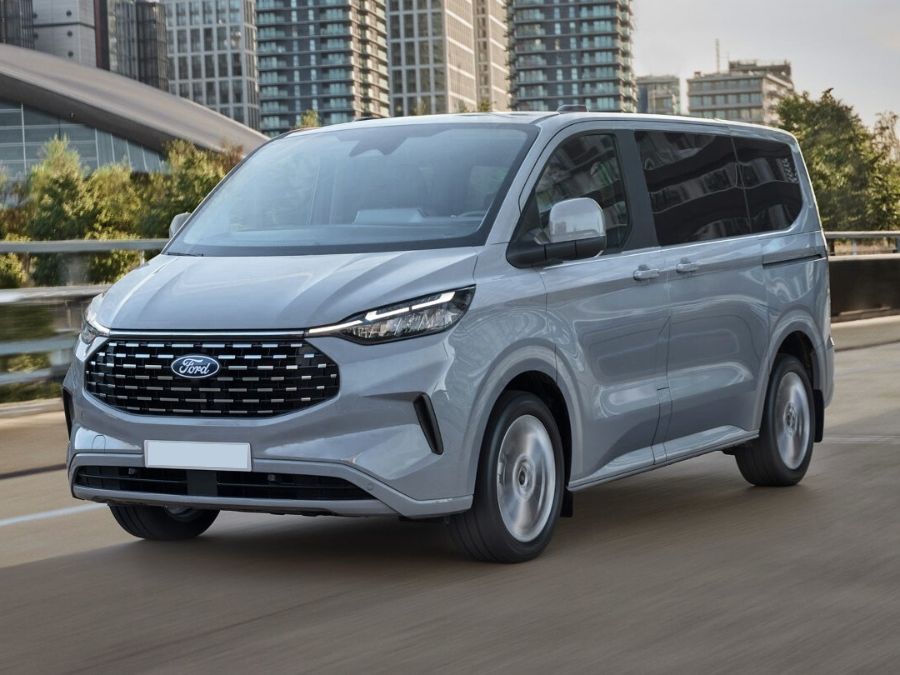
Ford Tourneo Custom Electric 8-seat

Ford Tourneo Custom 8-9 seat minibus

Our smallest electric option with a real-world mileage range of around 150–180 miles.

Toyota Proace 9-seat electric minibus

300x225 Toyota Proace electric verso

Enjoy the benefits of an electric vehicle with the versatility of this spacious MPV.

Citroen eSpace Tourer 9-seat electric minibus

_300x225 citroen espace tourer 9-seat electric

Comfortably accommodate eight passengers plus the driver with generous luggage space.

Ford eTransit 16-seat minibus

Ford eTransit 16 seat minibus

A fully electric minibus with 15 passenger seats from the UK’s favourite minibus manufacturer.

Maxus eDeliver9 16-seat minibus

Maxus eDeliver9 16 seat minibus

The MAXUS eDeliver 16-seat minibus can also be adapted as a wheelchair accessible vehicle.

Electric Minibus FAQs

Is there a 17-seat electric minibus?2026-08-24T11:50:43+00:00

Currently (Aug 2026) the largest capacity electric minibuses on the UK market is 16 seats. Both the Ford eTransit and the MAXUS eDeliver9 have 15 passenger seats plus the driver.  The advantage of these larger electric minibuses is that because of a change in UK legislation, they can be driven on a standard car licence (conditions apply).

Can you get 9-seat fully electric minibuses?2026-08-17T14:06:14+00:00

Yes you can. The Toyota Proace Verso Electric and the Citroën ë-SpaceTourer are both 9-seats (8-passengers plus the driver).

Single phase versus three phase charging for electric minibuses2026-08-03T13:03:18+00:00

When considering an electric minibus, it’s helpful to understand the difference between 7kW single-phase and 11kW three-phase charging, as it will determine how quickly your vehicle can be recharged.

  • 7kW single-phase chargers are the most commonly installed electric vehicle chargers for homes and smaller businesses. It uses a standard single-phase electricity supply and is ideal for overnight charging.

Using a 7kW charger, a vehicle with a 68kW battery would take 9.7 hours to charge (battery size/charging speed = time to charge)

  • An 11kW three-phase charger uses a three-phase electricity supply, which is commonly found in schools, commercial premises and industrial buildings. Because it can deliver more power to the vehicle, it reduces charging times and is often the preferred option for organisations operating larger electric vans and minibuses.

Using a 11Kw charger, a vehicle with a 68kW would take 6.1 hours to charge (battery size/charging speed = time to charge)

Many people also ask whether they can plug an electric vehicle into a normal three-pin household socket. The answer is yes, using the charging cable supplied with most electric vehicles, but this should generally be considered an emergency or occasional charging solution rather than one for everyday use.

  • A standard UK three-pin socket provides around 2.3kW of charging power, meaning a large electric minibus battery could take well over 24 to 40 hours to fully recharge, depending on its size.

Using a 2.3kW charger, a vehicle with a 68kW would take 29.5 hours to charge (battery size/charging speed = time to charge)

Dwell time – consider your vehicle’s dwell time. How long will it sit unused daily or throughout the week? If you are only using your vehicle once or twice a week, then a 2.3kW might be sufficient for your needs. If you are looking to charge overnight from 9pm to 8am then it might be a single-phase charger might be sufficient, depending on the size of your vehicle’s battery. For shorter dwell times, you might need to consider a three-phase 11kW charger.

What does AC, DC, CCS, kW and kWh mean?2026-08-03T12:34:50+00:00

Electric vehicles use a range of technical terms and acronyms. Here’s a simple guide to some of the most common ones.

  • AC (Alternating Current) – This is the type of electricity supplied to homes, schools and most workplaces. AC charging is typically used for overnight charging using a wallbox or charging point. The vehicle’s onboard charger converts the AC electricity into DC to charge the battery.
  • DC (Direct Current) – DC charging is much faster because the electricity is converted before it reaches the vehicle, bypassing the onboard charger. Often referred to as rapid or ultra-rapid charging, DC chargers are commonly found at motorway services and public charging hubs.
  • kW (Kilowatt) – A kilowatt measures charging power. The higher the kW rating, the faster the battery can be charged, provided the vehicle is capable of accepting that rate. For example, an 11kW charger will charge more slowly than a 50kW or 150kW rapid charger.
  • kWh (Kilowatt-hour) – Don’t confuse this with kW. A kilowatt-hour measures the amount of energy a battery can store, rather like the size of a fuel tank. A larger battery (higher kWh) generally provides a longer driving range, although factors such as vehicle weight, driving style, and weather conditions also affect how far you can travel.
  • CCS (Combined Charging System) – The most common rapid charging connector used by electric vans and minibuses across the UK and Europe. CCS allows both AC and DC charging through the same socket, making it the standard for most modern electric minibuses.
  • Type 2 Connector – The standard plug used for AC charging in the UK and Europe. Most schools and organisations with onsite chargers will use a Type 2 connection for everyday charging. Save
  • State of Charge (SoC) – Expressed as a percentage, this shows how much battery capacity remains. An SoC of 80% means the battery is 80% charged.
  • Range – The estimated distance an electric minibus can travel on a full battery. Real-world range will vary depending on passenger numbers, terrain, outside temperature, use of heating or air conditioning and driving style.
  • Regenerative Braking – A system that recovers energy when the driver slows down or brakes, sending it back to the battery to help extend the vehicle’s range and preserve brake pads and disks.
Are electric minibuses cheaper than diesel minibuses?2026-07-31T16:58:48+00:00

You will usually find that an electric minibus is more expensive to purchase or lease, compared to a diesel minibus, but running an electric minibus is cheaper due to lower energy costs, reduced maintenance needs, and tax or clean-zone exemptions.

  • Electricity is generally cheaper per mile than diesel, especially if you use a smart charger with off-peak tariffs
  • Electric motors are more efficient than diesel engines
  • Fewer moving parts in less complex electric motors means less wear and tear and the need for maintenance
  • Electric minibuses do not need oil changes of emission checks
  • Regenerative braking uses the motor to slow down and so prevents brake pads and discs from wearing out as quickly as diesel vehicles.
  • Although the blanket zero-emission exemptions for cars and light vans ended in April 2025, having a ZEV means you can often avoid congestion and ULEZ (Ultra low emission zones) charges.
Can you drive an electric minibus on a car licence?2026-07-31T17:01:00+00:00

Since the change in legislation in 2025, drivers with a standard car licence can drive ZEVs with a GVW (gross vehicle weight) up to 4250kg.

Read more about electric licences here

Why lease an electric minibus from Rivervale?

Variety of sizes and specs

Choose from 8-15 seat electric minibuses

Fuel cost efficiency

Enjoy lower fuel expenses

Carbon footprint reduction

Significantly lower your carbon emissions

Eco-friendly leadership

Be a local pioneer in electric vehicle adoption

Low Cost

ULEZ charge savings

Avoid ULEZ charges, unlike with diesel vehicles.

Minibus Maintenance

Maintenance savings

Lower maintenance costs than diesel

Get in touch

We are here to help and would love to talk through any aspect of getting your minibus

Go to Top