On 10th June 2025, the UK Government changed the regulations for ZEV (zero emission vehicles) to allow drivers with a standard car licence to drive ZEVs with a GVW (gross vehicle weight) up to 4250kg
Key Changes to Driving Licence Regulations
Drivers holding a standard Category B licence, a car licence, will now be able to drive ZEV (zero emission vehicles) with a GVW of up to 4,250 kg; the previous limit was 3,500kg. This change is in acknowledgement of the additional weight of the battery in an electric vehicle.
This change in regulations removes the D1 barrier for schools that want to adopt an electric fleet but have younger drivers with no inherited D1.
As with diesel minibuses, there is an additional allowance of 750kg for vehicles with wheelchair access for disabled passengers, bringing the allowable GVW up to 5,000 kg.
Weights of electric minibuses
9 seat electric minibuses
9-seat electric minibuses, technically classed as cars, could always be driven on a standard car licence as their GVW was under 3,500kg. The popular choices for 9-seat electric vehicles for UK schools and organisations are the Toyota Proace Versa electric, Vauxhall Vivaro Life and Citroen eSpace Tourer with GVW ranging between 2,800-3,100 kgs.
The 9-seat MAXUS eDeliver 9 WAV (Wheelchair Accessible Vehicle) could also be included in this category, as it could (and can still) be driven on a standard B1 car licence.
12-16 seat electric minibuses
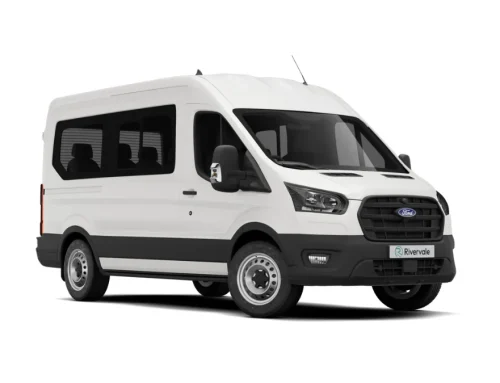
Larger electric minibuses including the MAXUS eDeliver 9 14-seat minibus or the Ford eTransit with 15 seats with a GVW of 3500-4250kg depending on configurations, can now also be driven on a B1 car licence.
Additional driver training for heavier vehicles
Even though D1 entitlement is no longer required for these heavier electric minibuses, Rivervale will always recommend additional practical driver training whether it is D1 driver training or MiDAS for anyone driving a minibus, diesel or electric, because the sizes and weights of minibuses are significantly different from those of a car. Even 8-9 seat minibuses, classed as cars, can be significantly larger than the average hatchback. Electric minibuses also have additional features drivers of petrol/diesel vehicles may not be aware of.
As well as addressing driver confidence with these larger vehicles, driver training can cover other considerations before they are taken out on the road including:
Rivervale recommend that anyone planning to drive a minibus on a regular basis undertake some form of training, ideally both theory and practical, so that they are aware of the issues and challenges of driving larger vehicles, whether this is MiDAS or a practical driving assessment with Rivervale.
Driving Electric Minibuses on a car licence
The change in licensing regulations for ZEVs is particularly good news for schools operating under a Section 19 Permit, who want to reduce their carbon footprint and increase their environmental credentials, but whose drivers do not have D1 entitlement.